

girls clothes |
- Is a crop top empowering for girls? How parents navigate what’s ‘appropriate’ for high school. - Washington Post
- Big Mouth Season 3 Episode 2 MeToo - How Big Mouth Addresses Toxic Masculinity in the Right Way - Esquire.com
- News You voted and these are the top 7 best consignment shops in metro Detroit Keenan - WXYZ
| Posted: 04 Oct 2019 03:00 AM PDT  Sky Bloomer, 18, jumps out of a friend's car as they head to Montgomery Blair High School in Silver Spring, Md. For senior girls at Blair, decisions about what to wear to school are influenced by differences in culture, religion and body types. (Cheryl Diaz Meyer/For The Washington Post) It was the morning of the first day of senior year, and Sky Bloomer had her back-to-school outfit ready to go: red-and-black Air Jordan Retro sneakers, black leggings and a tight, spaghetti-strap crop top with a koi fish print from Urban Outfitters. The tall teenager with long brown hair walked out of her bedroom and swung on her backpack, feeling "powerful," she recalled. Then, her parents saw her. "I'm not letting you leave the house looking like that," said her mother, Tara Bloomer, telling her daughter that she looked like an "easy girl." A "prostitute." Seeing his daughter walk down the driveway, Sky's father, Bryan Bloomer, tried asking her to change. But the teenager didn't budge. She got into her friend's car and left for school. Minutes later, Sky's father called her cellphone. He asked her what kind of message her outfit would send to her teachers and classmates on the first day. Truly powerful and intelligent women, he told his daughter, "don't have to show off everything they have." "Okay, misogynist," she replied. Sky's clothing choices have become a frequent point of tension between the teenager and her parents since the beginning of the semester at Montgomery Blair High School in Maryland. Fights like this one are, in some ways, an inevitable part of high school. For generations, rebellious teenagers and their parents have clashed over what clothing is appropriate for school. But this is high school in the age of Me Too, of hashtags about body positivity and campaigns against "slut shaming." Teenage girls today are using the language of female empowerment to defend their outfit choices to the adults around them, claiming autonomy over their bodies and calling out clothing restrictions they see as sexist. Amid this generational shift, parents are wrestling with how to talk to their teenage daughters about the clothes they wear. How do parents draw a line between what's suitable for school and what isn't? Should that line exist at all? "We used to make the argument that she was participating in her own objectification. Now girls are arguing back that this is a form of power they want to claim," said Lisa Damour, a psychologist and the author of several books on parenting adolescent girls. "I've watched parents get completely stymied by this."] [How to talk with teens about 'appropriate' clothes for school] In schools across the country, girls have staged protests against dress codes that they say are unfair and unevenly enforced, disproportionately targeting black, brown and curvier girls. Last month, girls at one school in Montgomery County, Md., responded to a new dress code by wearing exactly the kinds of clothes it prohibited. At Sky's school in the same county a few years ago, female students protested the dress code by posting photos of their outfits on social media with the hashtag #WhoAmIDistracting. In recent years, students say, teachers rarely call out dress code violations. These decisions instead usually fall on parents — and the students themselves. "It feels like an enigma wrapped inside a riddle," Damour said. "What's the right way to empower my daughter? I don't think that's so clear anymore."  Sydney Acuff, 18, walks to Montgomery Blair High School. Acuff said she likes clothes that show her midriff. (Cheryl Diaz Meyer/For The Washington Post) 'Internalized misogyny'These conversations are made murkier by the pressures teenage girls face to look a certain way on Instagram and other social media platforms, which often encourage girls to seek validation through likes and comments. Sydney Acuff, a 17-year-old senior at Blair High School, started wearing more revealing clothes last school year after a breakup with a boyfriend who was "very controlling and very manipulative," she said. "I wanted to rebel against him. That was one way I did it." She stopped wearing bras and started wearing "a lot of semi-see-through tops, a lot of camisoles," Sydney said. "My midriff is almost always showing to some extent." When she was coping with the breakup, she noticed that she was posting more selfies on social media. "Am I doing this because I want to, or am I doing this because I know these people are going to make me feel good for a certain amount of time and then I'll go back to feeling sad?" she reflected. "That's something I have to be careful with and have to be mindful of." But as the teenager has grown more confident in her body, her clothes have been a way for her to experiment, to be creative, she said. Her mother, meanwhile, has struggled with Sydney's crop tops and short skirts. She has tried explaining that certain clothes are disrespectful to her teachers and are a better fit for the beach or a party. "My friends and I, our generation, we consider ourselves feminist," said her mother, Mary Denham, a 56-year-old social worker. "I would think things like that would be the opposite of being a feminist. Her mother, Sydney argues, views the issue through "a very second-wave [feminist] lens" peppered with "internalized misogyny." "Even if we're dressed completely respectably, we still face the same stuff we would face if we're dressed half-naked," Sydney said. "We still get assaulted, we still get belittled, and we have our intelligence knocked." Through their conversations, Denham has begun to understand Sydney's views. "I'm trying to bite my tongue more and more," she said. "I try not to be as judging of it as I was." For other senior girls, even in the same friend group at the same school, decisions about what to wear are complicated further by differences in culture, religion and body types. Khushboo Rathore, another 17-year-old at Blair, would like to be able to wear crop tops and bandeaus like other girls at school do, like the girls on Instagram who post the caption "hot girl summer" and like the "VSCO girls" who look beachy and effortless with their short shorts, scrunchies and Hydro Flasks. [Rankings are a part of high school. Some teens aren't taking it anymore.] These trends are "basically just meant for skinny girls who can pull those clothes off," Khushboo said. Not only does she feel uncomfortable in many of those clothes, her parents, who grew up in a more conservative culture in India, often call her out for shirts that are too low-cut. Even when she's not trying to highlight her curves, her mother makes comments about covering up her cleavage, Khushboo said. "Anytime I'm in the house without a bra on, she says, 'Put a bra on before your dad or father or grandfather sees you,' " she said. Sometimes, parents can send mixed messages about their daughters' clothing. Jenny Granados Villatoro, 17, chats with another student as she walks to Montgomery Blair High School. Granados-Villatoro likes to look more masculine on some days and more feminine on other days. But she doesn't usually feel comfortable wearing crop tops and other revealing clothes. "Every time I go shopping it's kind of harder for me," she said, "because that's what every clothing store is selling." (Cheryl Diaz Meyer/For The Washington Post) Jenny Granados-Villatoro, 17, says her Salvadoran mother usually doesn't approve of shirts below the collar bone for school. But for prom last year, when Jenny wore a dress with a low V-neck, her mother encouraged her to buy a new bra that would better accentuate her curves. "I was like, 'No, I feel comfortable in my dress like this,' " without the new push-up bra, Jenny said. "It kind of threw me off, and I was confused and I thought about it a lot." Jenny said she understood where she was coming from. Her mother grew up competing in beauty pageants in a small town in El Salvador, in a culture with more traditional expectations of women. "She was dolling me up, I guess, to make sure I looked good enough for someone to come to me and have a conversation," Jenny said. Accommodating a cultureSky Bloomer says clothes are a way for her to show off her confidence, her "aesthetic." On her Instagram account, mirror selfies of Sky in a lime-green bikini appear next to photos of the teenager at swim practice or performing at Cambodian cultural events, a nod to her mother's heritage. She says her outfits are about expression, not the likes she gets from her peers, the friends who post flame emoji and comments like "queen" and "so prettyy." But her parents worry about her motivations behind outfits like the one she wore on the first day of school. "Honestly, Sky, I do not want us to use our bodies . . . to get attention," Tara Bloomer said as the family sat around a table eating Subway sandwiches on a recent afternoon. "Who said that my outfit was to get attention?" Sky responded. "So what were you thinking when you got dressed that way?" her father asked, with genuine curiosity in his voice. "I looked good! It fit me well, the colors matched," Sky said. "So, say more about 'fit me well,' " Bryan Bloomer said. "It was tight, it was a nice, tight outfit!" Sky said. "Uh huh, in the literal sense of the word 'tight,' " her father said. "It totally showed off all of your shape, leaving very little to the imagination." Sky told them that "literally everyone" at school wears clothes like that and no one commented negatively on her outfit. Sky Bloomer, 18, waits on a friend to give her a ride to Montgomery Blair High School. (Cheryl Diaz Meyer/For The Washington Post) Her mom acknowledged that they don't have these same conversations with Sky's older brothers. "There's a gender bias here," she said. She wishes she could trust that the boys and men in Sky's orbit will be respectful of her in any clothing. But she and her husband can't help worrying that someone could take advantage of her. "We have this ideal for what we'd like our society to be, and then there's the reality," her father said. The reality terrifies Bryan Bloomer. In conversations about Sky's clothing, his mind quickly spirals to fears about the porn industry, human trafficking and the dark corners of the Internet "trying to suck these young, beautiful women in," he said. He worries about the modeling requests Sky received after performing in beauty pageants recently. He thinks back to one of his friends from high school, a girl who was kidnapped at a 7-Eleven and whose body was later found in a field. He told Sky about the newspaper articles he'd read recently in which a man accused of sexual assault used the defense that the victim "was dressed a certain way and she was just asking for it," he said. "It's so offensive, but yet they're getting away with it. They make it about the women's look." [Black girls say D.C. school dress codes unfairly target them] "Sky, it's not an excuse for anyone to hurt you in any way because of the way you dress," his wife interjected. "Absolutely, it's not an excuse," he said. "But it's partly the environment that's out there," the mother said. Sky pushed back, refusing to accept their argument. "If we all want women to be able to dress how they want . . . and feel comfortable in what they're wearing, you just have to go for it and do it." "The question I have is whether that's really coming from the inside out, or whether that's influenced by this rape culture that's sending the message that your power comes from your looks and you have to put it out there in a way that's sexy," her father said. "How much of that is really them?" "What she's saying is you and I are cowards, instead of fighting what people are doing that's wrong," Tara Bloomer told her husband. But she asked Sky, "Do you think maybe 75 percent of you is doing this to claim your ownership of your right to dress nicely . . . and the other 25 percent is you being influenced by the culture where they manipulate women to show their bodies?" "I don't think I feel manipulated into showing my body at all," Sky said. Her mother said she was proud of her daughter for standing up for herself. She agreed that "we should not accommodate this culture." "I just want you to have a bit of a balance," Tara Bloomer said. "Keep track that your choices are yours." The day after their conversation, Sky turned 18. On Instagram, she posted a photo in the birthday outfit she chose to wear to school. It got more than 570 likes and 200 comments. There she was, posing and smiling in front of her high school, wearing the same black-and-red Urban Outfitters crop top.  |
| Posted: 04 Oct 2019 03:00 AM PDT Remember after school specials? Informative and educational, they ruled the after school television block for a quarter of a century, aiding thousands of young people in fine-tuning their developing sense of morality. Groundbreaking as they were in tackling thorny subjects like eating disorders and substance abuse, they earned a reputation as preachy, prescriptive, and sometimes hokey. In Netflix's Big Mouth, after school specials have finally found a worthy successor. Yet there's nothing preachy about Big Mouth—instead, it's an after school special for the twenty-first century, sucking the moralizing out of the formula to instead combine insightful commentary about formative, zeitgeist-y challenges with side-splitting humor. In its home run of a third season, Big Mouth lasers in on the #MeToo movement, delivering stories at once thoughtful and uproarious about issues familiar to anyone who's ever been a middle-school girl, including toxic masculinity, rape culture, and internalized misogyny. Yet in a crowded field of television shows wrestling with the #MeToo movement, Big Mouth doesn't stop there—it also considers the male side of the equation, investigating how men can feel at a loss to understand the conflicting desires of women. The season three premiere, "Girls Are Angry Too," picks up two weeks after the season two finale, which saw a jealous Andrew, heartbroken over his break-up with Missy and enraged by what he perceives as her budding romance with wheelchair-bound Lars, drag Lars out of his wheelchair in a misguided attempt to prove that Lars can walk. After two weeks of well-deserved exclusion, Andrew makes a grandiose entrance to shop class with an announcement: "I have a brief statement. These past two weeks have been a difficult but very necessary learning experience for me. And frankly, I'm ready to rejoin the middle school community and pretend that none of this ever happened." Sounds familiar, right? Andrew's side-stepping of consequences and refusal to soul-search come straight out of the non-apology playbook for disgraced but unrepentant men. Shop class takes a gruesome turn when perpetually sex-crazed Jay, driven to manic distraction by his abstinence from masturbation, saws off Andrew's fingertip while spaced out in a characteristically weird fantasy involving his female classmates animorphing into sexualized turkeys. Cut to the principal's office, where Andrew and Jay's parents have been summoned for a meeting. Jay's father, a sleazy lawyer who specializes in discount divorces for reprehensible men, argues that the accident was the fault of the girls, who distracted Jay because they dress "like whores." What follows are twenty-some exemplary minutes of television, which manage to yoke knotty ideas about toxic masculinity and slut-shaming together with the glorious phrase, "Eat your own ass!" Mr. Lizer, the odious, patronizing dean of student life, calls a school assembly to discuss toxic masculinity. Lizer indoctrinates the students into an all-too familiar narrative: boys are animals powerless to control their sexual urges, and it's the responsibility of girls to protect themselves from the beastly behavior of boys. Big Mouth keenly highlights how such hand-waving inoculates boys from admitting responsibility or accepting consequences, allowing them to respond as Andrew does: "I do feel out of control all the time, and I think I'm going to use that as an excuse for my actions." When burgeoning feminist Jessi speaks up about toxic masculinity, Lizer silences her with an admonishment, turning the language of the #MeToo movement around on her: "Jessi, now's the time to listen." To protect the girls from the "white hot male gaze," Lizer implements a dress code forbidding "leggings, jegging, short skirts, short shorts, tank tops, crop tops, halter tops, and tramp stamps." When Missy rightly notes that the dress code targets only girls' clothes, Lizer turns the spotlight on her, proclaiming that her modest overalls are the ideal of sexless female attire. In comparing Missy to a Despicable Me Minion, Lizer gets at a tightrope that women are all too accustomed to walking: be sexy, but not too sexy, but not too unsexy, either. When the girls band together to protest the dress code with a Slut Walk, Nick's older sister encourages him to be an ally, but Nick whines in response, "I don't want to be the guy that tells other guys they're being misogynistic." Nick's apathetic bystander attitude calls to mind the mentality of milquetoast would-be allies, who crave a pat on the back, but refuse to put in the work. However, Nick isn't the only one with misgivings about the Slut Walk—although she's the mastermind behind it, Jessi worries that she's objectifying herself through the protest. 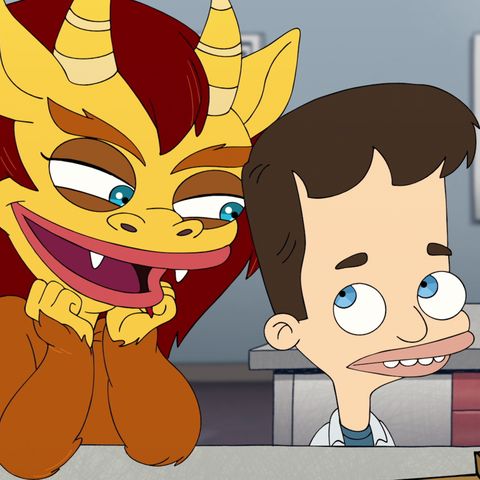 Netflix With a catchy song-and-dance number in which the boys sexualize the protest and slobber over the enraged girls, the Slut Walk ends in disaster. Missy opts out of wearing revealing clothing, arriving late in her standard overalls with a protest sign, only for Lola and the girls to label her a traitor to her gender. Nick takes a stand as his sister suggested, but fails to stick the landing, alienating himself from the boys and girls alike. As punishment, Lizer implements loathsome, scratchy uniforms. Andrew, seemingly an incel in the making, livestreams a rant: "What do women want? There was this girl, and I tried being the sweet guy they're always saying they want, and she dumped me!" He seeks guidance from a gathering of men's rights activists, which turns out to be a neo-Nazi meeting. Staggered by their hatred, a transformed Andrew weeps in Nick's arms, admitting that he overreacted to Missy's rejection: "I thought that I was the victim, but now I think that I'm the asshole." Andrew's arc reflects how hamstrung modern men are by their own lack of emotional intelligence, and just how forlorn their lack of emotional vulnerability can leave them. Missy saves the day with a protest of her own, forgoing her uniform in favor of her overalls and sticking it to Lizer with an iconic outburst: "Eat your own ass!" When the girls cheer her on, Missy brands them hypocrites, reminding them that they shamed her for her outfit. Missy's admonition of the girls evokes the complicated messaging girls absorb about the right and wrong way to be a feminist, and the painful work of policing one another's feminism. When Andrew piles on, she turns her explosive rage on him in a line that will resonate with any woman who's ever suffered the histrionics of an aggrieved ex-boyfriend: "We went out for like five fudging days. I don't owe you squat diddly. Get over it!" The trials of Bridgeton Middle School's female students come to a head with the school musical, Disclosure the Movie: The Musical, adapted from a 1994 film starring Michael Douglas as a middle manager falsely accused of sexual harassment by his female boss, played by Demi Moore. "Beware! Pretty women want our jobs!" shouts an animatronic boss in the opening number. While Jessi condemns the musical as "a misogynistic fantasy," Lizer adopts the sanctimonious, 'woe is me' language of #MeToo critics who claim that these are dark days for men: "Disclosure the Musical is an exploration of the dangerous times that we men are now forced to navigate. This play dares to harass the very notion of sexual harassment and say, 'Yeah! Me Too!'" Paging through the script, the girls are dismayed by their offensive, one-note parts. Jessi is cast as "Dutiful Wife," who trills in her solo, "Standing by her husband is a woman's job." In a smart stroke of intersectional feminism, Latina student Gina is disgusted to be cast as "Senorita Cleaning Lady," while Asian student Ali is "Hot Asian With Asian Boobs." When Gina and Ali call Lizer out, demanding an explanation for the offensive roles, Lizer's response is simply, "Because diversity." When the girls quit the musical in protest and Missy opts to stay in the lead role, promising to effect change from within, Jessi is quick to shame Missy in another insightful subplot about girls policing the feminism of other girls. Missy leans all the way into her lead role, embracing the thrill of her sexual awakening under the tutelage of a seductive new hormone monstress. She learns to use sex appeal as a weapon against Lars and Nick, oozing flirtatious energy and refusing to remain a people-pleaser. Missy's embrace of her sexuality recalls "How to Have an Orgasm," another exemplary episode of the third season in which Jessi, too, learns to embrace her sexuality. Jessi struggles with embarrassment and internalized shame about her inability to have an orgasm, only to learn how to masturbate successfully in a Tomb Raider fantasy about the treasure of pleasure, fueled by a trusty electric toothbrush. Meanwhile, Lizer enlists Lola as Disclosure the Musical's stage manager, insisting that they share a "special relationship." What follows is a fascinating arc about how men gaslight the women they abuse, which sees Lizer demand a titillating foot rub from Lola, convince her that it was her idea, then accuse her of inappropriate behavior when she voices her trepidation. When Lola turns Lizer into the principal and the musical is abruptly cancelled, an enraged Lizer shouts, "This is another example of women using sexual harassment to destroy good men." In a season of standout moments, the most standout moment of all occurs when an infuriated Jessi vents to Nick about the challenges of being a girl: "You don't get it. You don't know what it's like being a girl. People tell you what to wear, the whole world is telling you how big your boobs should be, and you called us sluts!" Nick, at a loss, responds, "I'm on your side. I just literally don't know what to do." An exasperated Jessi responds, "I don't know exactly either. I think it might just be this long conversation that we all have to keep having."  Netflix That, there, is the heart of it. Gender and sexuality are an ongoing negotiation, not a subject with a tidy, correct answer. Big Mouth itself is an exceptional foray into that conversation--a show that neither moralizes nor condemns, but instead explores the agony and the ecstasy of this awkward, interminable, important conversation. Big Mouth explores that subject from within and without, tackling the internal struggle of defining our sexuality and our sexual politics, as well as the external work of doing right by the struggles of others. Other shows exploring similar subjects include Bojack Horseman, which addresses the propensity of Hollywood and society writ large to invite abusers back into public life. There's also Jane the Virgin, which sees Jane confront her assumptions about a sleazy professor who sleeps with students. There's Brooklyn Nine-Nine, which highlights the ability of women to disagree about feminism and moral compromise. There's Shrill, which tackles fat-shaming and misogynistic trolls, and there's Unbelievable, with its remarkable story about rape culture and miscarriages of justice. Even The Bachelor has joined the conversation with a moving, sensitively handled discussion between the bachelor and a contestant who confided in him about the ongoing psychological impact of her traumatic sexual assault. Yet what other shows are doing exceedingly well with adults, Big Mouth does backwards and in high heels with children. Where adults like Bojack Horseman and Jane Villaneuva wrestle with right and wrong, the kids of Bridgeton Middle School must do the same while grappling with their nascent identities, sexualities, and senses of morality. Big Mouth's middle schoolers are equipped with far fewer tools than adults, which leaves them flailing in the relative moral dark. The show gives them ample room to get it wrong, as well as the grace to grow and change. Yet in these very special episodes, Big Mouth never veers into Very Special Episode territory. Leave it to a bunch of cartoon tweens to nail grown-up problems better than anyone.  |
| News You voted and these are the top 7 best consignment shops in metro Detroit Keenan - WXYZ Posted: 03 Oct 2019 06:16 AM PDT 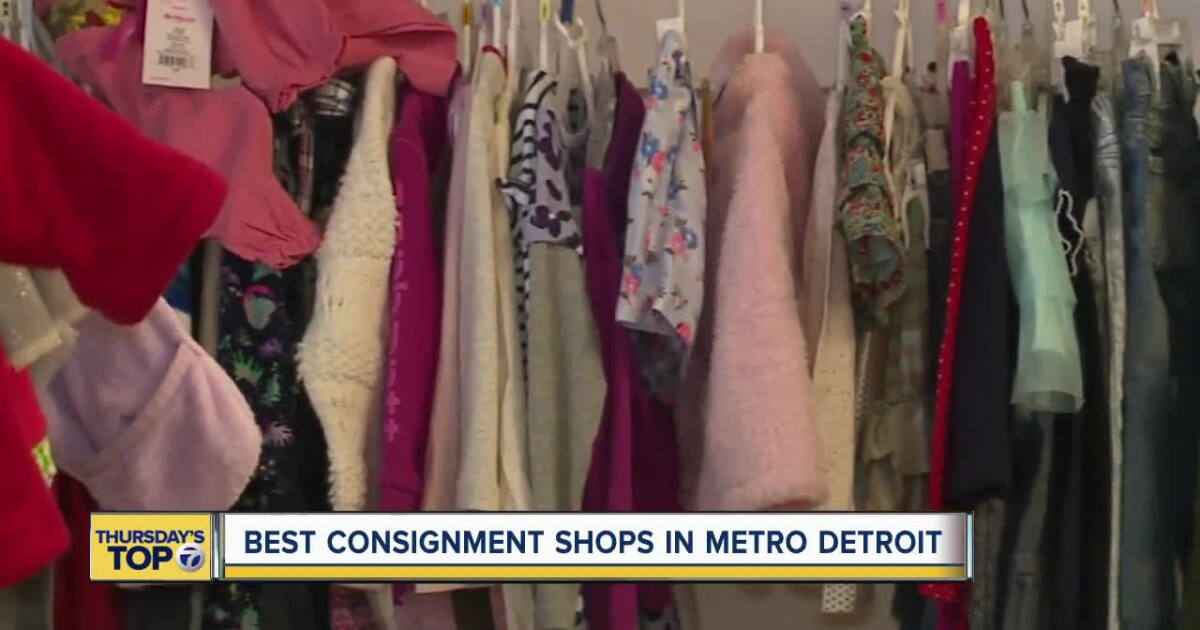 (WXYZ) — Whether you're looking for something retro and hip or designer duds without the designer price – consignment shops are a gold mine. From newborns to adults, casual clothes to ballgowns, even home goods, consignment shops are good for the environment and good for your budget. We asked our 7 Action News viewers for the best consignment shops in metro Detroit for our Thursday's Top 7. #7 BABY BABY PLUS MORE (NORTHVILLE) Looking for big deals on the little one in your life? Baby Baby Plus More has clothes for babies, toddlers and teens, some brand new! I found some boys a couple pair of Old Navy jeans with the tags still on them. Baby Baby Plus More also carries baby furniture, toys and books. Baby Baby Plus More is 7th on our list. #6 SECOND TIME AROUND (PLYMOUTH) Second Time Around comes in 6th. It's located in a historic home near downtown Plymouth. They carry gently used and even new, women's clothes, shoes and handbags. For the best deal, shop their clearance items for 50 to 75% off their usual prices. #5 TREASURE MART (ANN ARBOR) Check out the Treasure Mart in Ann Arbor for timeless home goods. Anything from knick knacks to statement furniture pieces to entire rooms. #4 PLATO'S CLOSET ALLEN PARK #4th in our viewer poll is Plato's Closet in Allen Park. They have a wide variety of clothes and active wear for teens and young adults. If you consign with them, they pay on the spot, too. #3 SUM GIRLS BOUTIQUE (BERKLEY) Sum Girls Boutique in Berkley is 3rd. Sum Girls says they're the place to go for sustainable fashion and a whimsical mix of upscale trendy and timeless pieces for tween, teens and women. #2 CONSIGNMENT CLOTHIERS (NORTHVILLE) Our runner up is Consignment Clothiers in Northville. Sally, a long time customer at Consignment Clothiers, loves the selection. "I always find something that I want to buy. Shoes, bags, handbags." Sally says she has tried other consignment shops but none measure up to Consignment Clothiers. "What keeps me coming back", Sally adds, "is just they always have something that's current, and they always have something for me that fits my budget". #1 BORO (DETROIT) The top spot goes to Boro near Eastern Market. The small space is open and light and the fashions are curated. Shopper Jane agrees Boro is tops. "This is the best. It's the best." Jane loves the selection and the space. She says, "It's lovely. It's like a boutique." We also met Lauren. She is a huge fan of the 70s. Everything from her clothes to her 70s Dodge Dart. Lauren say Boro has just the right blend of then and now. "So I like to mix my style so I always come down here to get my new stuff. Or my new old stuff."  |
| You are subscribed to email updates from "girls clothes" - Google News. To stop receiving these emails, you may unsubscribe now. | Email delivery powered by Google |
| Google, 1600 Amphitheatre Parkway, Mountain View, CA 94043, United States | |


.jpg)


0 Yorumlar